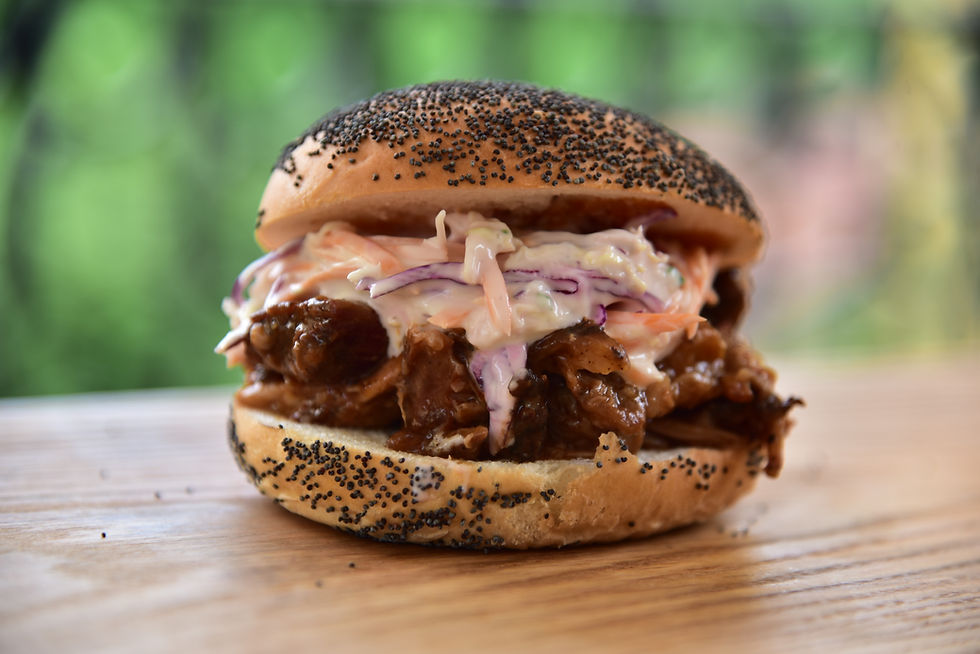
HOW TO MAKE BARBECUE PORCHETTA - All the steps
Making real porchetta on the barbecue is impossible. This is because the original porchetta is the Ariccia PGI, whose specifications require it to weigh between 60 and 90 kg.
Don't worry, in this recipe we'll show you how to "porchettare," which means using the spices and methods of porchetta but with smaller cuts, to achieve an exceptional result.
INGREDIENTS
pork rib with rind
salt
rosemary
fennel
garlic
coarsely ground pepper
roasting twine
PREPARATION
Having made the necessary premises, in this recipe we will give you all the information you need to make a "porchettatura" of pork rib.
We chose to use pork rib because it has a good percentage of lean mass, unlike the belly.
Regardless of the cut of meat you choose, it is essential that the rind is present.

Since we chose the same cut as the ribs, all the bones will be present. So let's start by deboning.
During this phase, it is very important to have a sharp knife and adequate protective equipment such as a thick leather apron and a cut-resistant glove.
Boning must be done meticulously, trying to leave the cut of meat as intact as possible. Therefore, we recommend making shallow incisions along both sides of the bone, lifting it, and cutting underneath to remove the last bits of meat holding it together.

Once the entire rib cage has been deboned, we must run our fingers over all the meat to check that there are no fragments or splinters of bone left, due to our processing or that of the butcher.
We proceed with salting and seasoning the meat.
At this stage we start with the salting: we will need to use 15-30 g of salt for every kg of meat.
Take some fine salt and sprinkle it all over the meat, massaging it into all the cuts left by the removal of the bones. Don't forget to sprinkle salt on the sides as well.
Let the meat rest for about 30 minutes and in the meantime prepare the spices.
We'll season the porchetta with garlic, rosemary, pepper, and fennel. Each ingredient should account for 20% of the total seasoning.

Coarsely chop all the ingredients with a knife and sprinkle them evenly over all the meat.

Let's proceed with a somewhat technical phase that will give us a lot of satisfaction with the final result: the binding.
We soaked some roasting twine in water for about half an hour, so that it wouldn't split or burn during cooking.
We close the porchetta by rolling it up on the short side, so that it is easier to handle during cooking.

The tying can be done simply by knotting the string to form loops and creating the knots on the side where the meat joins, thus leaving the rind side clean and therefore more pleasing to the eye.

We have arrived at the cooking stage.
Traditionally, porchetta is cooked in a wood-fired oven, but we used a classic Weber kettle, the barbecue that many people (including us) use to begin their journey into the world of barbecue.
To allow for simple and even cooking, we can place the meat on a rib rack (turned upside down) or a rotisserie, which, thanks to the rotating movement of the spit, will allow the heat to brown and cook our porchettato rib evenly.
We then skewered the porchetta and set up the barbecue indirectly, placing the briquettes on the right and left sides of the brazier and placing the meat in the middle.
The briquettes were lit from outside the combustion chamber and used for cooking only once they were fully lit, indicated by a white coating covering their entire surface. We placed a tray directly under the meat to collect the cooking juices.

The combination of the rotisserie's rotary motion, plus the circular heat distribution created by the position of the embers and the spherical shape of the brazier, allows for perfect cooking.
Please note: the barbecue must be kept closed throughout cooking.
The brazier temperature must be set to 200°C and it will take at least four hours, but it will be necessary to rely on the temperature recorded at the core of the meat, which must have reached 80°C.

Once cooked, we must let it cool, so that the meat does not lose all its liquids when cutting.
Eat it with whatever you like best: hot or warm in a sandwich, porchetta will always be a joy to the palate.